
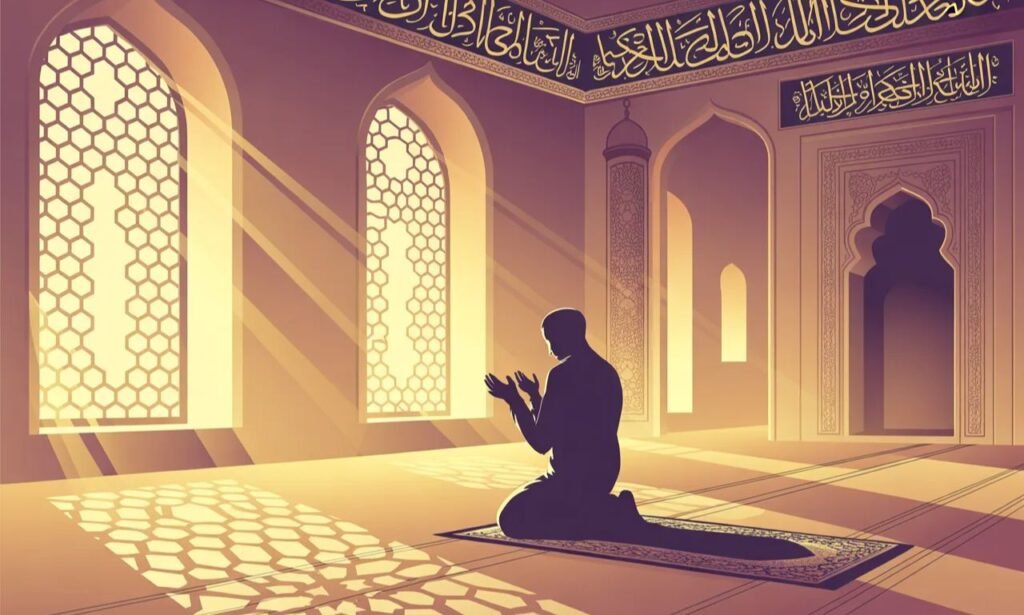
Prayer is the heartbeat of a Muslim’s daily life. It is not just a daily routine or a set of physical movements, but a beautiful way to connect with Allah. When you stand on the prayer mat, you leave the noisy world behind to find spiritual peace and divine rewards. This holy act brings namaz blessings in Islam, filling your heart with calm and washing away your daily sins.
Ever feel like life is moving too fast and your mind never stops racing? What if you could hit pause five times a day to instantly find inner peace and clear your head? That is exactly what worship does for you. It acts as a powerful spiritual shield, protecting your heart from stress and bringing deep mental relaxation when you need it most.
By pausing your day for supplication, you invite divine mercy and countless rewards into your life. It keeps you grounded, grateful, and deeply connected to your faith. Ultimately, this simple act of devotion alters your entire day, turning ordinary moments into a journey of spiritual growth.
The Powerful Blessings of Praying Five Times a Day
Establishing the five daily prayers functions as the ultimate spiritual shield for a practicing Muslim. This consistent routine of worship cleanses a believer’s spiritual slate, acting as a constant river that washes away minor sins and missteps throughout the day. By answering the call to prayer, you align your life with divine timing, welcoming continuous divine mercy and unmatched productivity into your mundane daily tasks.
- “The five daily prayers wipe out sins just as water cleanses dirt.” — Prophet Muhammad (PBUH)
- “Prayer is the pillar of religion; whoever establishes it establishes faith.” — Prophet Muhammad (PBUH)
- “The five daily prayers are an expiation for what occurs between them.” — Prophet Muhammad (PBUH)
- “Sustained prayer brings light to the face and barakah to life.” — Islamic Scholar
- “Guard strictly your habit of prayers, especially the middle prayer.” — Holy Quran (2:238)
- “Daily prayer shields the home and the livelihood from unexpected calamities.” — Classic Islamic Proverb
How Namaz Strengthens Your Relationship with Allah
Namaz serves as a direct, unmediated communication channel between the creation and the Almighty Creator. Standing on the prayer mat represents an intimate appointment where a believer speaks directly to Allah without any worldly intermediaries. This repetitive, beautiful conversation fosters deep spiritual growth, transforming a simple daily duty into a profound bond built on genuine love, gratitude, and complete reliance on God.
- “The closest a servant comes to his Lord is during prostration.” — Prophet Muhammad (PBUH)
- “When you stand in prayer, you are knocking on the Divine door.” — Ibn al-Qayyim
- “Remember Me; I will remember you. Be grateful and do not deny Me.” — Holy Quran (2:152)
- “If you knew Who you were speaking to, you would never look away.” — Ali ibn Abi Talib
- “Namaz is the conversation where the servant speaks and the Lord listens.” — Hasan al-Basri
- “He who seeks intimacy with the Creator finds it on the prayer mat.” — Sufi Saint
Spiritual Benefits of Regular Namaz
Regular prayer acts as sustenance for the human soul, ensuring it does not become starved by the distractions of material life. Each cycle of prayer (rak’ah) strengthens your internal Iman (faith), pulling your focus away from temporary worldly illusions and redirecting it toward eternity.
- “Prayer is a light that illuminates the dark recesses of the soul.” — Prophet Muhammad (PBUH)
- “Establish prayer; surely prayer restrains one from shameful and unjust deeds.” — Holy Quran (29:45)
- “The soul that does not pray is like a house without a foundation.” — Imam Malik
- “Regular prayer keeps the spirit alive in a dead, materialistic world.” — Imam Al-Ghazali
- “Through prayer, a believer transitions from worldly illusion to ultimate reality.” — Islamic Scholar
- “Every raka’ah is a step taken away from ego and toward spiritual elevation.” — Ibn Taymiyyah
How Salah Purifies the Heart and Soul
Our hearts naturally accumulate spiritual rust from daily exposure to negativity, greed, and ego. Salah functions as a daily purification ritual, scrubbing the heart clean through the physical and spiritual acts of Ruku (bowing) and Sujud (prostration). This process of intentional humility drains the soul of arrogance, leaving it pure, soft, and receptive to the guidance of the Holy Quran.
- “Salah is a flowing river that cleanses the heart five times daily.” — Prophet Muhammad (PBUH)
- “The rust of the heart is scrubbed away by frequent prostrations.” — Ibn al-Qayyim
- “True success belongs to those who purify themselves and remember their Lord.” — Holy Quran (87:14-15)
- “When the body bows in Ruku, the pride of the soul is broken.” — Imam Al-Shafi’i
- “Salah empties the heart of worldly desires, leaving room for divine light.” — Hasan al-Basri
- “A pure soul is the direct fruit of a consistently guarded prayer.” — Imam Ahmad
The Role of Namaz in Strengthening Faith (Iman)
A Muslim’s faith is not static; it naturally fluctuates based on environmental influences and personal struggles. Namaz acts as the ultimate anchor that stabilizes and elevates your religious devotion when doubts or exhaustion creep in.
- “The boundary between a believer and disbelief is the abandonment of prayer.” — Prophet Muhammad (PBUH)
- “Prayer is the anchor that holds faith steady during life’s storms.” — Ali ibn Abi Talib
- “Successful indeed are the believers—those who offer their prayers with humility.” — Holy Quran (23:1-2)
- “Iman naturally rises and falls, but daily prayer keeps it from breaking.” — Ibn Taymiyyah
- “Your commitment to Namaz reflects the true weight of faith in your heart.” — Imam Malik
- “To strengthen weak faith, one must first repair their broken prayers.” — Islamic Philosopher
Mental Health Benefits of Namaz in Islam
In an era dominated by anxiety and constant digital noise, Namaz serves as an oasis of absolute psychological relief. The intentional transitions between standing, bowing, and prostrating induce deep mental relaxation and alleviate accumulated cognitive stress.
- “O Bilal, give us the call to prayer; comfort us with it.” — Prophet Muhammad (PBUH)
- “Seek help through patience and prayer; it is truly hard except for the humble.” — Holy Quran (2:45)
- “When a worldly crisis burdened the Prophet, he immediately rushed to prayer.” — Companion of the Prophet
- “Namaz provides a psychological sanctuary where anxiety cannot easily penetrate.” — Modern Islamic Psychiatrist
- “Prostration drains emotional exhaustion and fills the mind with absolute stillness.” — Islamic Thinker
- “Five daily pauses for worship protect the mind from modern burnout.” — Health and Wellness Scholar
How Prayer Brings Peace, Comfort, and Inner Calm
True peace cannot be found in material wealth; it is a gift granted directly to the heart by the Divine. When a believer steps away from the frantic pace of life to perform supplication, a profound sense of inner peace settles over their mind.
- “Verily, in the remembrance of Allah do hearts find ultimate rest.” — Holy Quran (13:28)
- “True peace drops upon the prayer mat like morning dew upon grass.” — Ibn al-Qayyim
- “When you surrender your worries in Sujud, peace takes their place.” — Imam Al-Ghazali
- “Prayer is the ultimate comfort for a broken heart grieving a loss.” — Classic Islamic Scholar
- “Calmness is a divine gift given to those who stand before God.” — Hasan al-Basri
- “The world gives noise, but the prayer mat offers profound, healing silence.” — Sufi Proverb
The Importance of Khushu in Receiving the Blessings of Namaz
To unlock the deepest rewards of prayer, one must move beyond mindless physical motions and cultivate Khushu (mindful focus). Khushu requires anchoring your wandering thoughts, understanding the words spoken, and standing before God with a trembling, hopeful heart.
- “A man gets nothing from his prayer except what he is mindful of.” — Prophet Muhammad (PBUH)
- “Khushu is the very soul of prayer; empty movements hold no life.” — Ibn al-Qayyim
- “Stand before Allah with devout obedience and a quiet, focused mind.” — Holy Quran (2:238)
- “Do not peck like a crow; pray with slow, deliberate presence.” — Companion of the Prophet
- “A single unit of prayer with deep focus outweighs hours of distraction.” — Imam Al-Ghazali
- “When the mind wanders, the spiritual rewards of Namaz begin to diminish.” — Islamic Jurist
How Namaz Helps Muslims Avoid Sin and Wrongdoing
The daily structure of Islamic prayer creates a powerful, built-in moral compass for the believer. Knowing that you must stand before your Lord in a few short hours acts as a psychological deterrent against engaging in immoral behavior or unethical transactions.
- “If your prayer does not prevent you from sin, it is incomplete.” — Prophet Muhammad (PBUH)
- “Surely, good deeds wipe out evil deeds; this is a reminder.” — Holy Quran (11:114)
- “The one who prays regularly builds an inner defense against corruption.” — Imam Al-Shafi’i
- “You cannot easily commit a sin when you know you must pray soon.” — Hasan al-Basri
- “Namaz shapes your character outside the mosque just as it does inside.” — Islamic Scholar
- “A regular worshiper finds a natural dislike for immoral societal trends.” — Ibn Taymiyyah
The Blessings of Performing Fajr Prayer
Waking up for the Fajr prayer in the quiet twilight hours requires sacrificing comfort, making it a supreme demonstration of love for Allah. This specific prayer bestows a unique spiritual light upon the believer’s face and places them under the direct protection of God for the entire day.
- “The two raka’ah of Fajr are better than the world and everything in it.” — Prophet Muhammad (PBUH)
- “Whoever prays the Fajr prayer is under the explicit protection of Allah.” — Prophet Muhammad (PBUH)
- “Establish the dawn prayer; indeed, the recitation of dawn is ever witnessed.” — Holy Quran (17:78)
- “Waking for Fajr is the ultimate victory over the whispers of Satan.” — Imam Ahmad
- “The morning barakah of a Muslim is unlocked by the Fajr prayer.” — Classic Islamic Proverb
- “Fajr brings a unique spiritual light that remains visible on the face.” — Ibn al-Qayyim
Quran Verses About the Blessings of Salah
The Holy Quran explicitly commands believers to guard their prayers, framing it as the foundational step toward ultimate success in both worlds. These sacred verses highlight how regular worship infuses life with divine energy and clears away heavy spiritual burdens.
- “Recite what has been revealed to you of the Book and establish prayer. Indeed, prayer prohibits immorality and wrongdoing, and the remembrance of Allah is greater.” — Surah Al-Ankabut (29:45)
- “And seek help through patience and prayer, and indeed, it is difficult except for the humbly submissive [to Allah].” — Surah Al-Baqarah (2:45)
- “Successful indeed are the believers: those who are humbly submissive during their prayers.” — Surah Al-Mu’minun (23:1-2)
- “And establish prayer and give zakah and bow with those who bow [in worship and obedience].” — Surah Al-Baqarah (2:43)
- “Indeed, those who believe and do righteous deeds and establish prayer and give zakah will have their reward with their Lord, and there will be no fear concerning them, nor will they grieve.” — Surah Al-Baqarah (2:277)
- “Maintain with care the [obligatory] prayers and [in particular] the middle prayer and stand before Allah, devoutly obedient.” — Surah Al-Baqarah (2:238)
Hadiths Highlighting the Rewards of Daily Prayer
The Prophet Muhammad (PBUH) consistently illuminated the path of devotion by explaining the immense, life-changing rewards tied to our daily prayers. His words offer deep mental relaxation and reassurance, showing that every movement on the prayer mat carries heavy spiritual weight.
- “If there was a river at the door of anyone of you and he took a bath in it five times a day would you notice any dirt on him? That is the example of the five daily prayers by which Allah erases sins.” — Prophet Muhammad (PBUH)
- “The first thing for which a person will be brought to account on the Day of Judgment will be his prayer. If it is sound, he will have succeeded and prospered.” — Prophet Muhammad (PBUH)
- “Know that among your best deeds is the ritual prayer, and no one preserves their ablution except a true believer.” — Prophet Muhammad (PBUH)
- “When the time for an obligatory prayer arrives and a Muslim performs its ablution, its humility, and its bowings perfectly, it will be an expiation for his past minor sins.” — Prophet Muhammad (PBUH)
- “Give good tidings to those who walk to the mosques in the darkness of the night, for they will receive perfect and complete light on the Day of Resurrection.” — Prophet Muhammad (PBUH)
- “No Muslim servant prostrates to Allah even once, but Allah records for him a good deed, erases a sin from his record, and raises him by one degree in Paradise.” — Prophet Muhammad (PBUH)
FAQ’s
Q1: What is the main spiritual benefit of regular prayer?
The greatest reward is gaining immense namaz blessings in Islam, which cleanses your soul and strengthens your connection with Allah.
Q2: How does daily worship protect a believer from negativity?
Experiencing consistent namaz blessings in Islam creates a protective shield, keeping your heart safe from sins and worldly anxieties.
Q3: Can regular prayers help improve my mental health?
Yes, the calming nature of namaz blessings in Islam relieves emotional stress, bringing deep peace and tranquility to your mind.
Q4: Why is the morning prayer considered so special?
Starting your day with Fajr unlocks unique namaz blessings in Islam, placing you directly under divine light and protection.
Q5: How does sincere devotion affect a Muslim’s daily life?
True devotion attracts continuous namaz blessings in Islam, filling your home, time, and daily work with immense barakah.
