
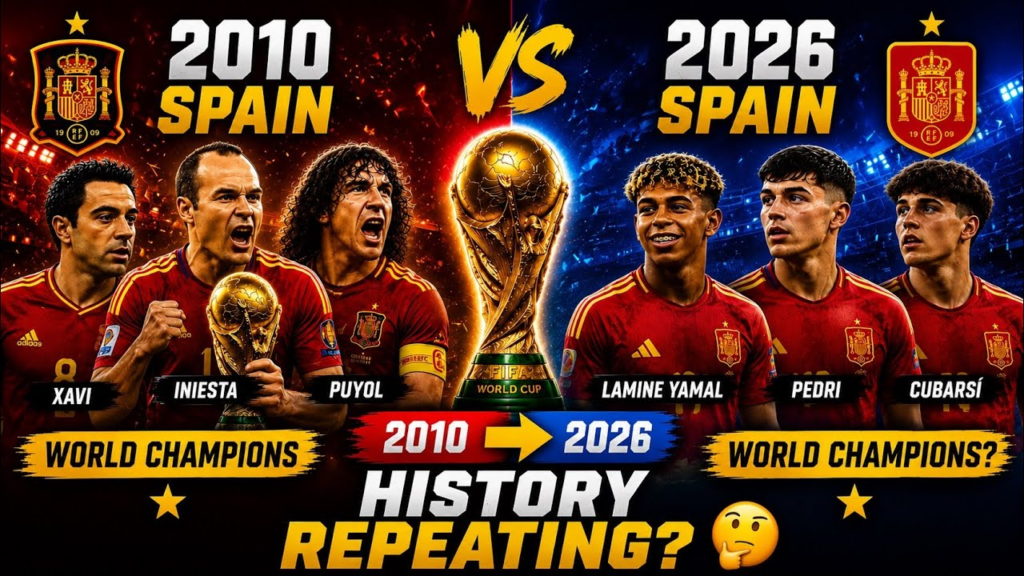
Spain’s 2 World Cup triumphs, in 2010 and 2026, represent different eras of Spanish football. And at any moment football fans can go to 1 x Bet and bet on the Spanish national team.
The 2010 champions were the peak of the tiki-taka generation, while the 2026 winners combined technical quality with greater athleticism, tactical flexibility, and a new generation of stars. Although both teams shared a commitment to possession and intelligent football, their identities were shaped by different football landscapes. When it comes to Spanish football, 1xBet has the best options from all across the Internet.
The 2010 team, coached by Vicente del Bosque, was built around a historic core of Barcelona and Real Madrid legends. Iker Casillas provided leadership in goal. But there were many other legendary names in that team, with 4 examples being:
- Carles Puyol;
- Xavi Hernández;
- Andrés Iniesta;
- and David Villa.
Their strength came from controlling matches through passing, movement, and patience. Spain often overwhelmed opponents by denying them possession, with Xavi and Iniesta controlling the rhythm and Busquets providing defensive balance. The team’s 1-0 victory over the Netherlands in the final, secured by Iniesta’s extra-time goal, completed Spain’s first World Cup title.
An evolution from that first generation
The 2026 champions, led by Luis de la Fuente, represented an evolution rather than a departure from Spain’s traditional philosophy. The squad included established figures such as Rodri, Pedri, Dani Olmo, and Marc Cucurella, alongside young talents including Lamine Yamal and Pau Cubarsí. Instead of relying almost exclusively on slow, controlled possession, Spain blended technical dominance with quicker transitions, pressing intensity, and more direct attacking threats from wide areas.
The biggest difference between the 2 sides is their attacking profile. The 2010 team depended heavily on the creativity of its midfield and the finishing of Villa, with Iniesta and Xavi often deciding matches through subtle combinations. The 2026 side had more variety, using explosive wingers, dynamic midfielders, and a younger attacking structure. Lamine Yamal’s creativity and Rodri’s control in midfield symbolized the balance between youth and experience that defined the champions.
Finally, in terms of defense, the 2010 side featured a legendary group of defenders at their prime, while the 2026 team relied more on collective organization and technical ability. The 2 teams, however, shared the same foundation: confidence on the ball, tactical discipline, and a belief that controlling the game was the best way to win.
